

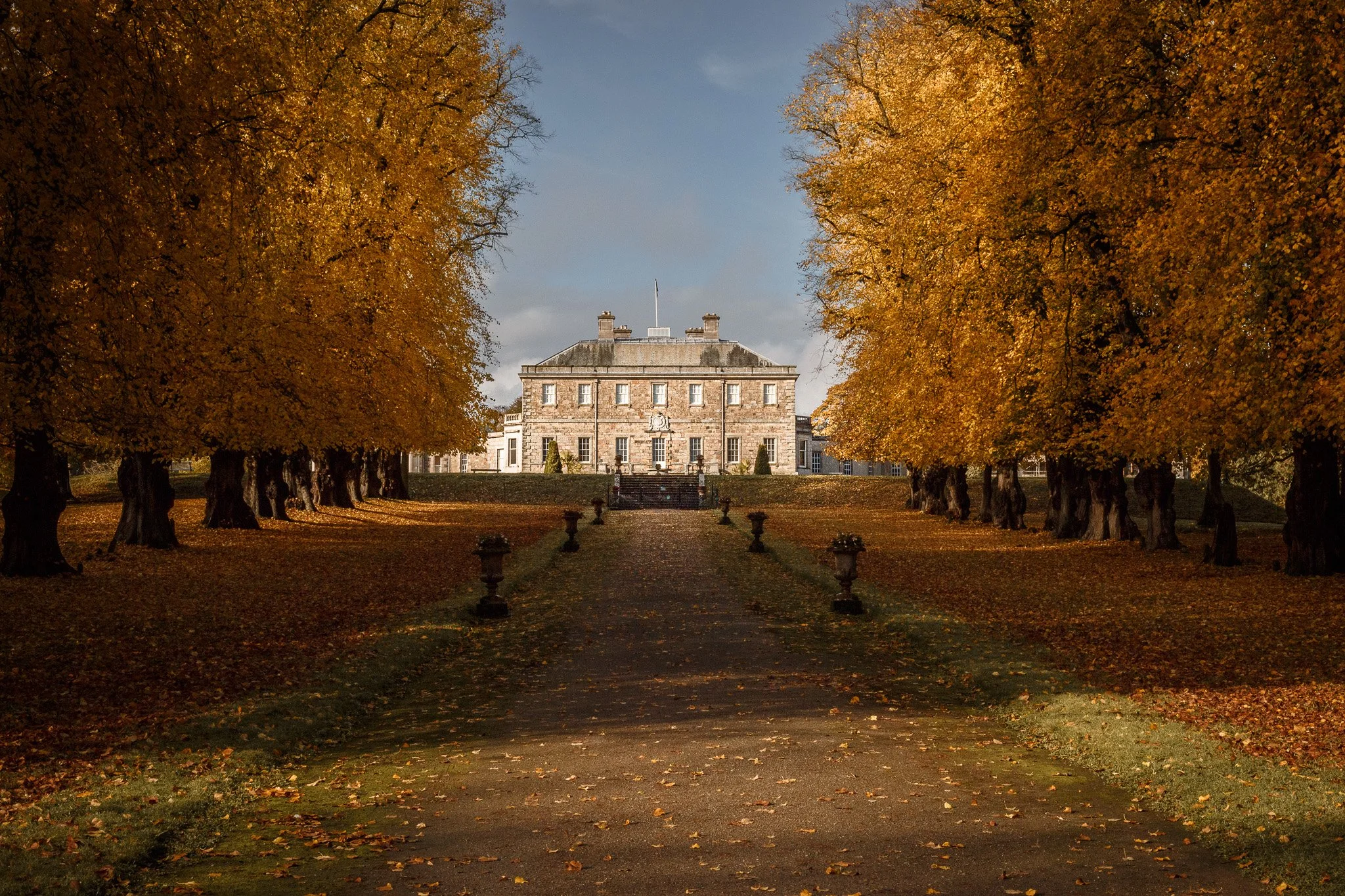
Points of Interest
NTS Garden
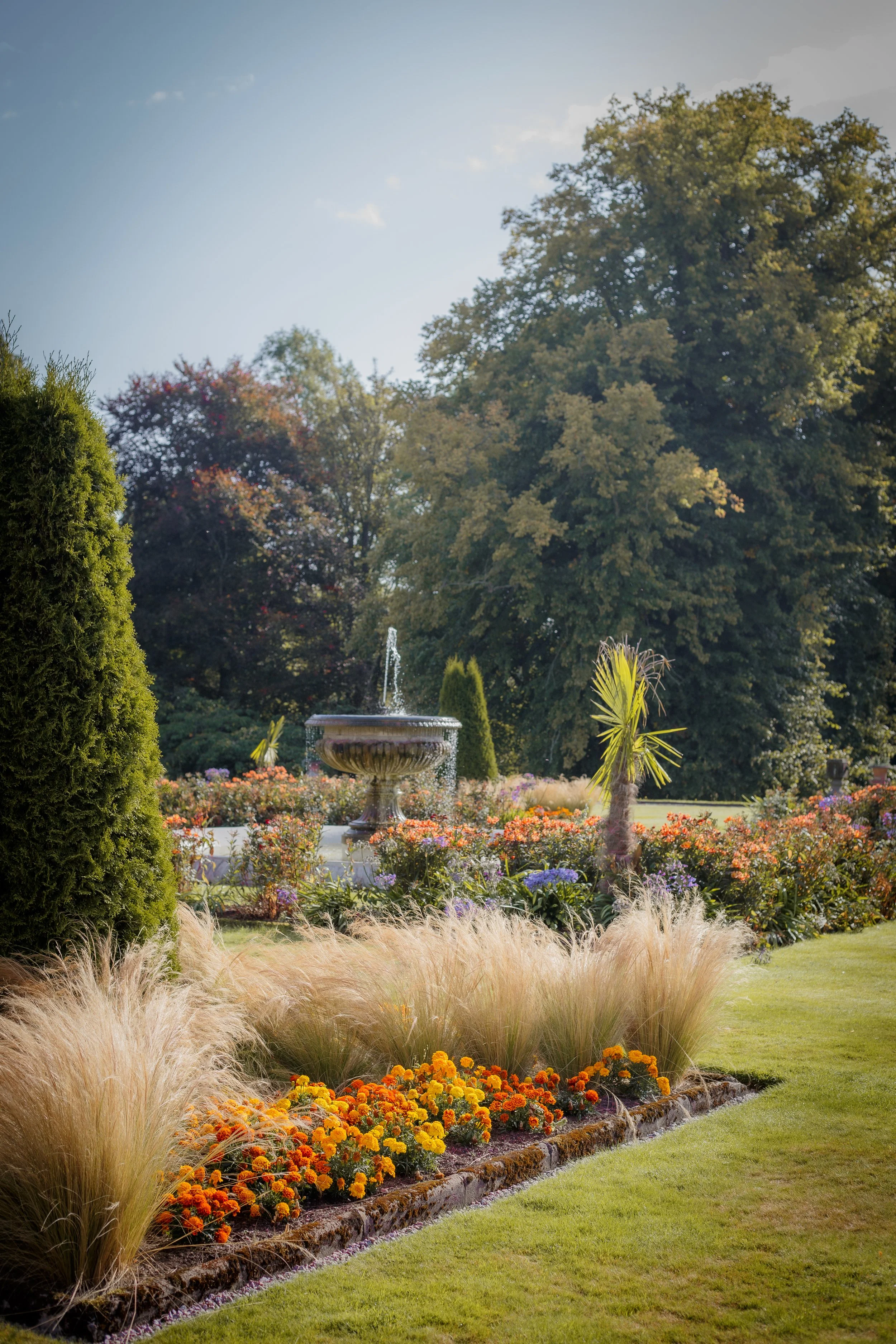
In the 1730s the 2nd Earl of Aberdeen raised the terrace to the east of the house and planted an avenue of lime trees, which remain today. A fountain on the terrace was installed around 1836, followed by the creation of the stone-kerbed flower beds.
The present fountain dates from 1899, when it was commissioned by Lord and Lady Aberdeen to replace the earlier one. It was made specially for Haddo although its design was inspired by common classical design forms which were popular at the time.
The view from the terrace garden across Haddo Country Park are glorious. You can admire many commemorative trees, including two enormous wellingtonias planted by Queen Victoria and Prince Albert in 1857. By the mid 19th century, Lord Aberdeen had begun to plant the policies with millions of trees, as well as making ornamental lakes and setting out various drives and walks.
You can find out more information on the garden here
The Scot’s Mile
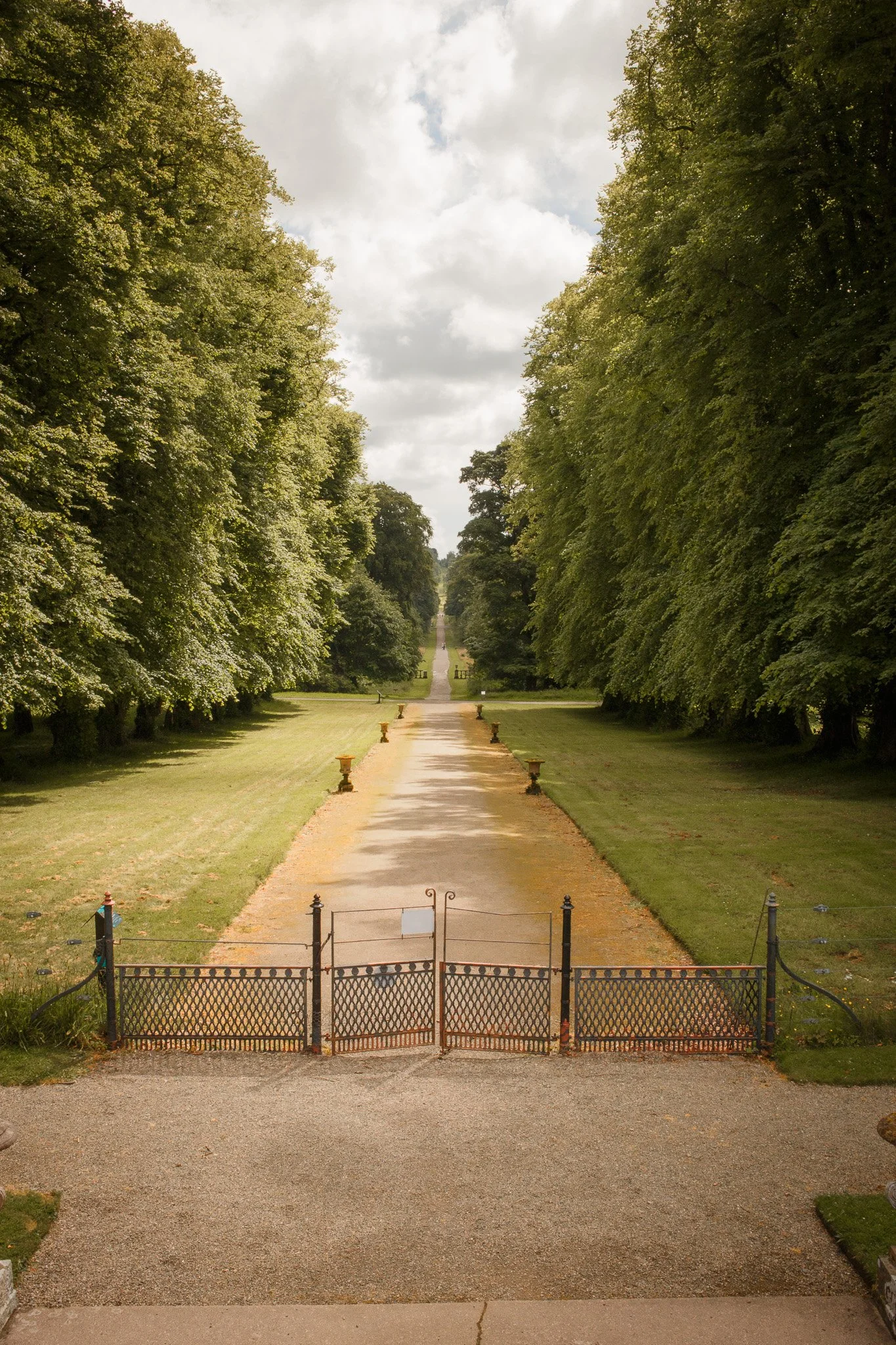
Dissecting the Country Park, is a hugely impressive straight drive, the “Scots Mile” (10% longer than a standard mile, in case you are wondering).
The Golden Gates
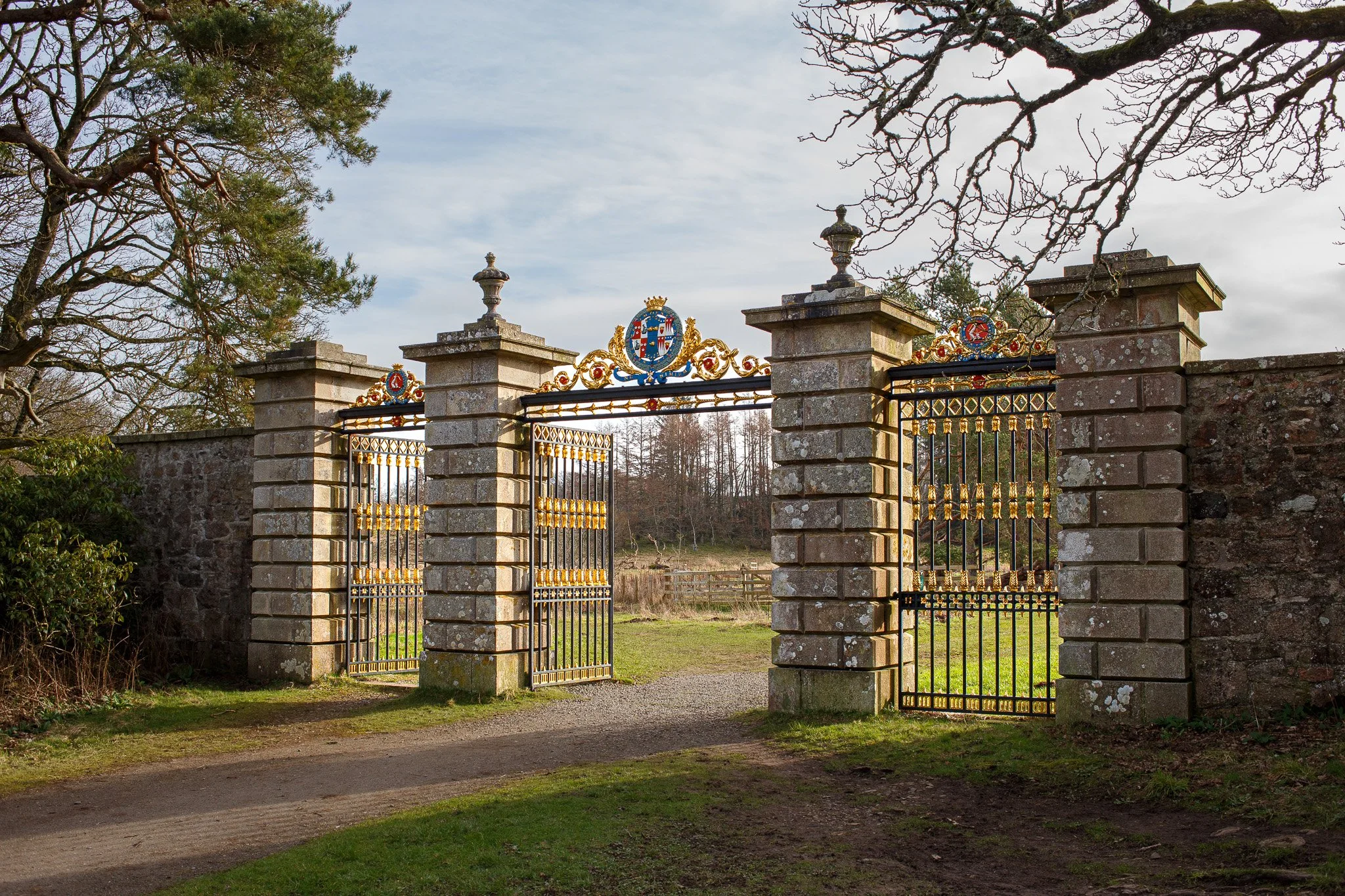
The Golden Gates are a feature of the designed landscape. Access to Haddo has always been along the drive upon which you travelled to get here – the gates are purely decorative. They date to circa 1847.
The coat of arms at the head of the gates is in celebration of the 4th Earl's two wives: Lady Catherine Elizabeth Hamilton (the boats and small flowers) and Harriet Douglas (the heart with a crown). It also bears the emblem of the Order of the Thistle, of which the Earl was the senior knight, having received the green ribbon as far back as the year 1808. The Latin inscription reads: No one "cuts" (attacks/assails) me with impunity.
The gates were re-gilded as part of the Haddo Regeneration Project, a very tricky undertaking. The gilding was applied using wafer thin gold leaf, which, as you can imagine, would blow away with the tiniest whisper of wind. The hard work was worth it. The gates are stunning.
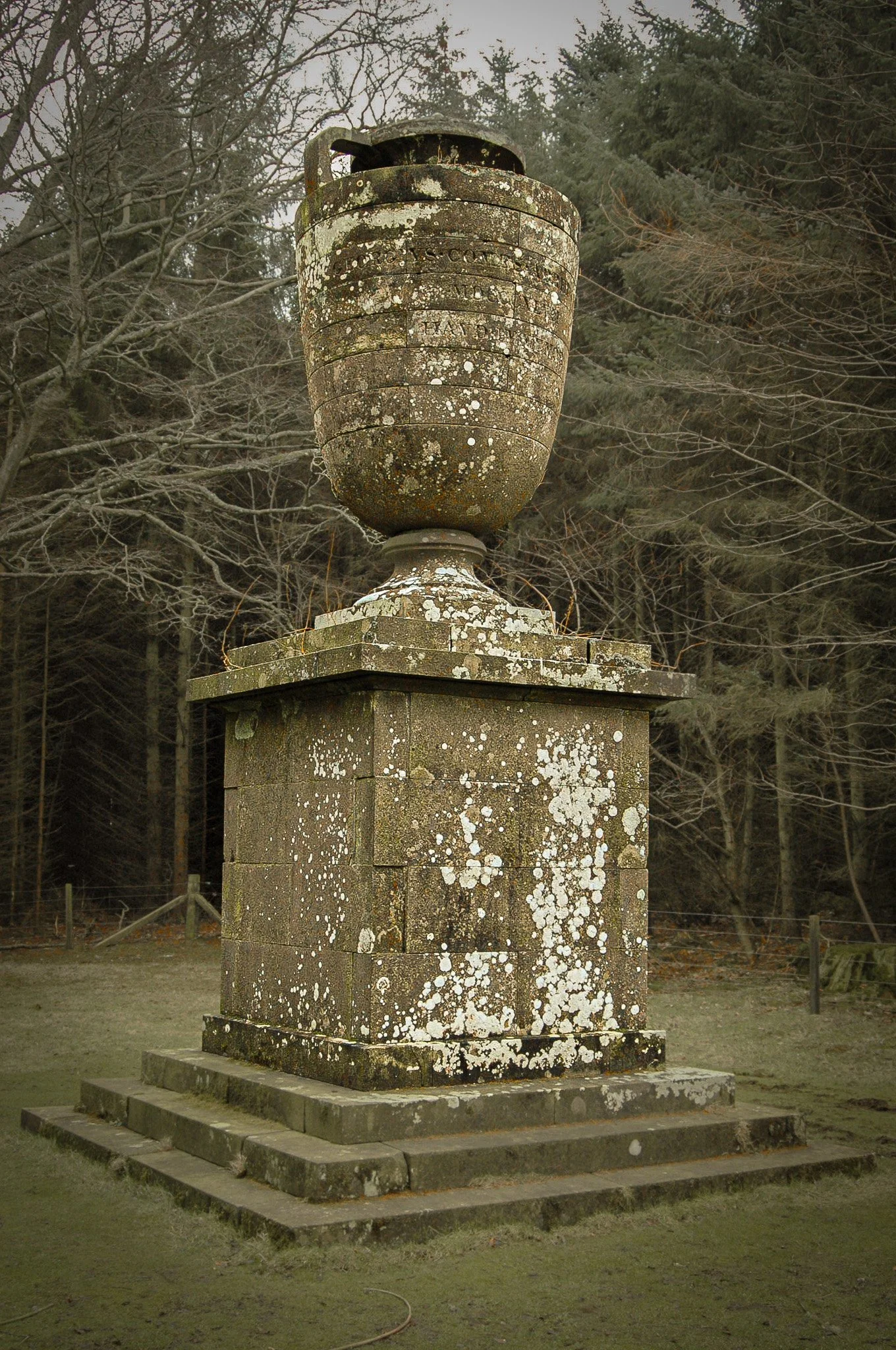
The Urn & Deer Statues
The Urn and Deer Statues were placed at the end of the Scot's Mile in memory of the 4th Earl's first wife, three daughters and son, who all died of tuberculosis, or 'consumption', as it was known. Consumption was a highly contagious disease which paid no heed to wealth, age or social standing.
George, the 4th Earl (1784 – 1860), created today's landscape of vistas, avenues and ornaments after being inspired by his Grand Tour of Europe. George was Britain's Prime Minister during the Crimean War and arguably the most famous of all the Earls.
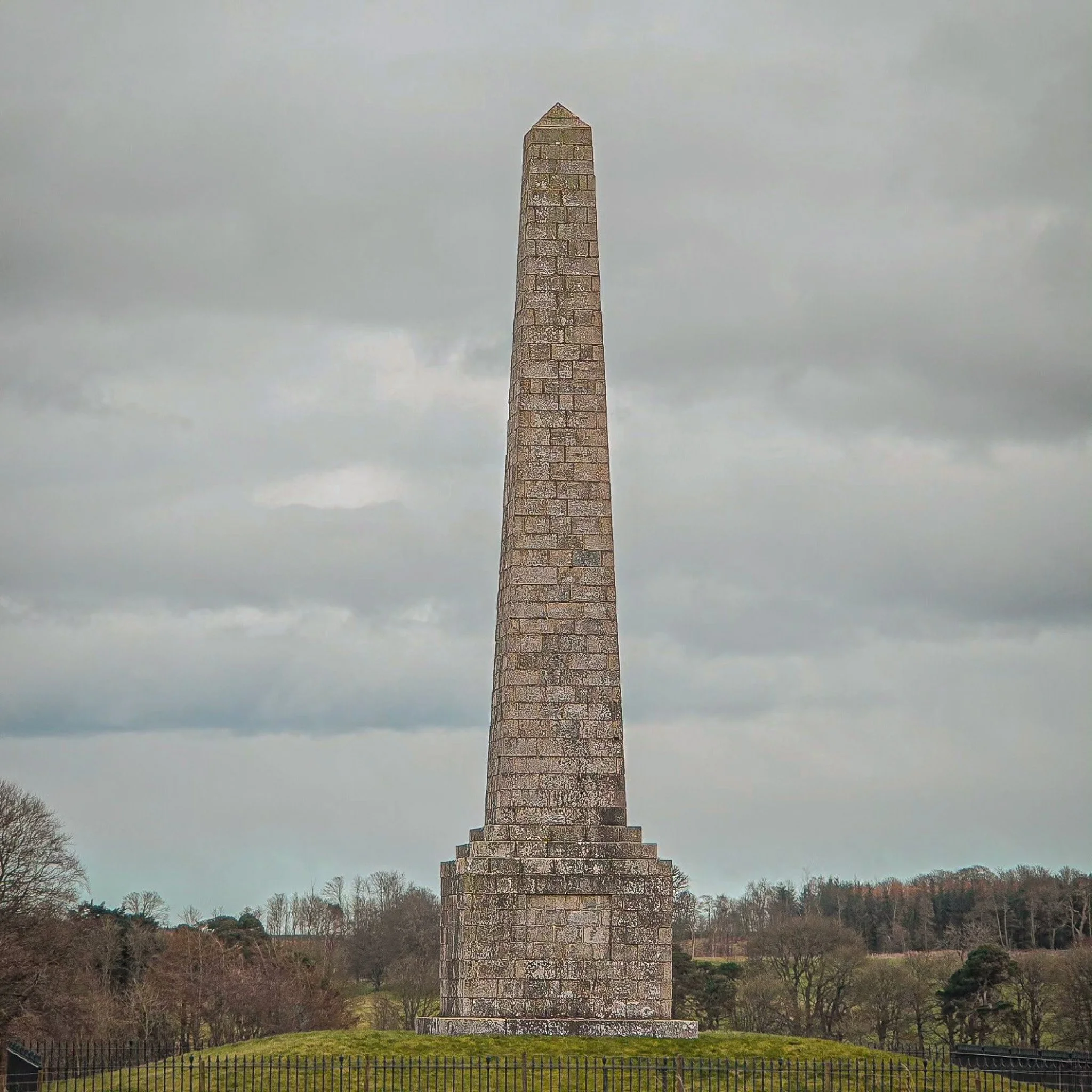
The Monument
This monument was raised by the 4th Earl in memory of his younger brother, who served with Wellington during the Battle of Waterloo. A similar monument was raised on the site of his fall in Belgium.
Lt Col Sir Alexander Gordon was 'aide de camp' to the Duke of Wellington and was mortally wounded at his side near the square at the foot of the monument during the attack of the Middle Guard. A cannon ball hit his leg and smashed it beyond repair. Sir Alexander Gordon was eventually transported to an inn at Waterloo, Wellington's HQ, where he died at 3:30am in the morning of 19th June 1815, after the amputation of the leg. Hearing of Gordon's death, Wellington said:
"Thank God I do not know what it is to lose a battle, but certainly nothing can be more painful than to win one with the loss of one's friends."
The Pheasantry
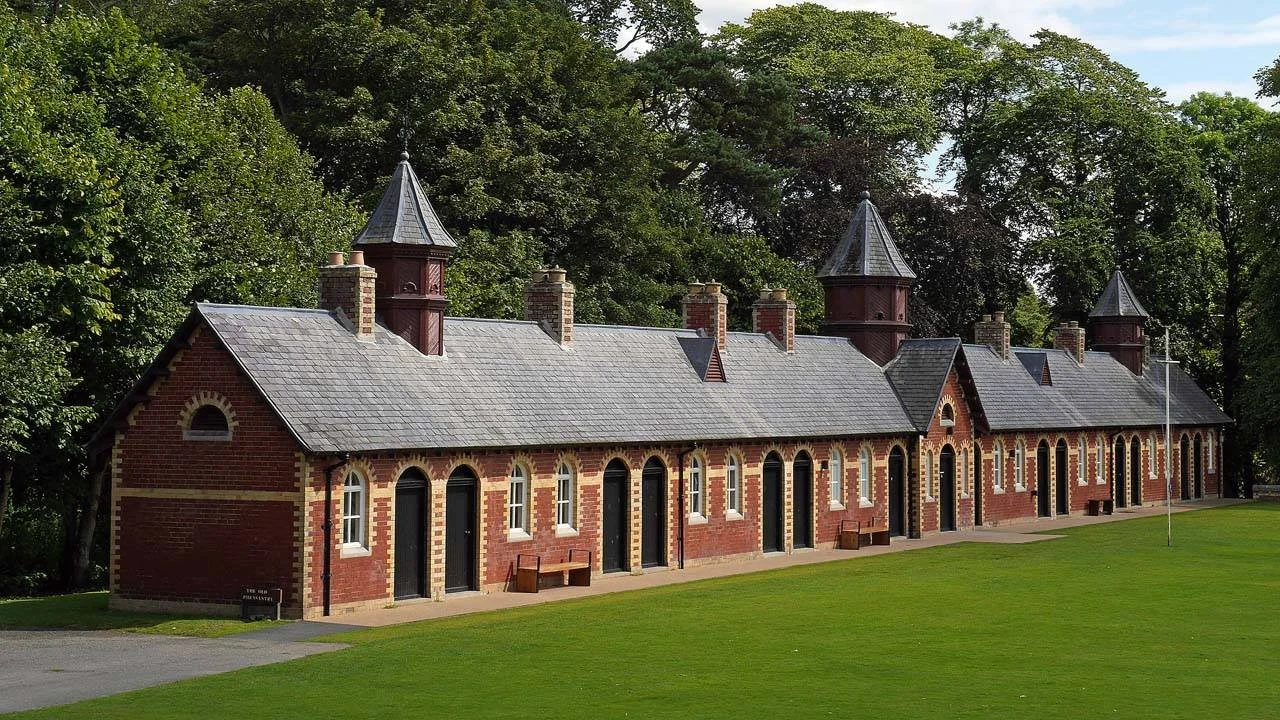
The Pheasantry, previously known as the Poultry Yards, is a beautiful example of Victorian architecture. Commissioned in 1884 by the 7th Earl, the Pheasantry was built to house pheasants and doves.
Originally, its entire length had a porch roof along the front, and the flat lawn had runs made of chicken wire so the fowl could exercise. The building was converted to residential use in 1920, which must have been very cold as it is of single skin brick construction. The Pheasantry is now a very well used building. The Scouts have one end, which they rent as part of a perpetuity agreement and there are many camps throughout the year. The other end is used by Aberdeenshire Council for forest schools, bushcraft etc, and the country park staff use it for many events throughout the year.